Monday, January 23, 2017

On the Asian Monolith

If I have to choose between listening and talking, I often choose to listen because I realize that I still have a lot to learn and there are many in the community who are older, wiser, and more articulate than I.

But on this topic, I do have thoughts that I wish to share. I realize that sometimes the dialogue gets heated. People get hurt on both sides, for whatever the issue. And in the heat of it, it's sometimes hard to understand what each person is trying to say. Here, I wish to use my voice primarily to share what I know, in hopes that if you are reading this as a Non-Asian who wishes to learn, you'll be able to get a very broad sense of why Asians reject the idea of the Asian Monolith and why the mere rejection of such can cause tensions between Asian storytellers.

Things to consider:

1. "Asian" is a silencing term.

I don't know about other Asians, but I don't go around introducing myself as "Asian-American," because honestly, that term is so broad that it's the equivalent of going around and introducing myself as "European-American."

For the purposes of this post, I'm going reference the East Asian countries of China, Japan, Korea, Taiwan and some of the South Asian countries such as Vietnam and Singapore. This is not all of Asia. Asia is much bigger than this, to the point that I can't speak on everyone because I simply am not educated enough. 

2. Historically, we have been divided at times.

If I said that all Europeans can tell all narratives that occurred in European history, would everyone approve of that?

If a person of German descent decided to write a fictional novel set during the WWII from the point of view a Holocaust victim, this author would likely come under heavy scrutiny. In fact, many would argue that such a story should always be written by an #ownvoices author.

"Asians" are not some special exception. We haven't always be united in every point in history--which ethnicity has? We too have narratives that are still fraught with tensions and sensitivities, even in the post-memories of later generations. The difference is that many of our narratives are glossed over in history classes. There are points in "Asian" history that to this day remain very contested. To just list a few: China and Japan (e.g. Nanjing Massacre/Incident--however it is thought of); Japan and Korea (e.g comfort women); China and Taiwan (military threats and sovereignty); China and North Korea and South Korea (I can't even speak on this).

So let's ask the question again, the same one that we did before, but now "Asian-fied": If you were a person of Japanese descent writing from the point of view of a Chinese character during the Manchurian occupation of WWII, or some equivalent event in a made up world with cultural appropriation, is that okay?

Can you write it? Of course. You can write whatever you want. But should you? That is something to ask yourself as a writer, and to be aware of as a reader.

This is not to say that we are always divided. Rather, it is to say that there are specific narratives in specific points of time that should remain told by a particular group of "Asians."

This once again shows the damaging limitations of the term "Asian" when that's the only way you can think of the various countries. It bears repeating that we are all very different. We have different languages. We have different customs. Even for the societies that ostensibly seem to condone the fundamental Confucian values of the patriarchy, filial piety, the importance of roles, etc. no two are exactly the same. 

3. Immigration among Asian countries makes for distinctions within distinctions.

As a Chinese-American, do I feel comfortable writing a Singaporean or Vietnamese narrative? No, I do not. But what about the other way around? In many countries such as Vietnam and Taiwan, there are significant populations that are considered "native" and significant populations that are considered "Chinese immigrants." The latter term is quite elusive, as it doesn't specify when the immigration occurred (sometimes it was during the Qing dynasty. Sometimes it was during the wars, or the rise of the Communist Party). After many generations, it is sometimes up to the family to decide how they wish to identify. Between the natives and non-natives, there are sometimes tensions, especially when a contested issue (such as the China and Taiwan sovereignty debate) flares up, bringing issues of heritage back into the gray. Meanwhile, I know people who are Vietnamese-American who are just as "Chinese" as my parents, and others who are not. To sum, there are large populations of Chinese in many "Asian" countries, but less so the other way around. In whom the storytelling authority resides is consequently blurred. 

4. Multiple those distinctions within distinctions with immigration to the US.

To complicate things further, many Asians you encounter are probably Asian American. Within Asian Americans, there are distinctions of first, second, third etc. generations. Do I, as a second generation Asian American, have the authority to tell the narratives of my first generation parents? This will vary on a case by case, family by family basis. Are my parents more "Asian" than I am? Yes, probably. But what does that mean?

So far, I've mostly aimed to provoke you into thinking and considering questions that many Asians battle with all the time.

So you've shown me is that there are differences upon differences upon differences in a group that many people think of as a monolith, you might say. But do you have a final point?

If there must be a point, then let it be this: distinctions are so fine and so complex that at the end of the day, it's up to  the marginalized Asian writers to decide the stories they want to tell. The biggest issue right now is that this complexity is currently lost on much of the western world because we are missing stories. I'm not just talking about historical fiction here. I'm talking about ways of thinking, of seeing the world. There is no single brand of "Asian", but the lack of voices overall seems to perpetuate that misconception.

I may be only speak for myself, but I will say this: as a second generation Chinese American, I did feel marginalized. Maybe not so much as a first-generation, immigrant Chinese, as I didn't experience a language barrier, but I felt it all the same. This marginalization compounded with the constant tussle between preserving my Chinese values and assimilating Western ones has led me to consider my identity quite thoroughly. If I were to put an #ownvoices label on something, I have given it quite a bit of thought. If I decide not to put an #ownvoices label on something, I have also given it a lot of thought. And others likely have too.

Because here's the paradox: Asians are not a monolith, but Asian Americans have all experienced marginalization. We all have wondered just what it means to be us in a world that seems determined to slap one label onto all our different voices.

So please, be kind. Be respectful. And above all, listen with an open heart and an open mind. Because am I "Asian" enough? Yes, some would say. Heck no, my relatives would say (I'm at a middle school literacy rate). Even the issue of whether mainland Chinese "Asian" enough is now debated. Honestly, no one is ever XXX enough when it comes to something as rich and enduring as heritage. The learning never stops, but the learning can never begin if we silence one another.

Friday, December 30, 2016

2016: A Year in Review


For many, I know that 2016 was a year of more downs than ups. The reverse may also be true. I can't speak for everyone, only myself. So I'm going to outline my year by focusing on the personal events (as we all know what went down in November :( ).

2016: A Year in Review

January

  • signed with my super-agent
  • visited Harry Potter World and bought a chocolate frog
  • finished writing my 5th manuscript, THE FINAL BRILLIANCY, which clocked in at 71k
  • registered for my first ever Creative Writing course (!)
  • also registered in a second semester of Chinese Language 
February 
  • caught an extremely bad cold
  • fell down a revision hole
March
  • still lived in the revision hole
April
  • climbed out of the revision hole!
  • attacked by a bunch of shiny new story ideas. Saved for later
May
  • honestly don't know what happened. Passed like a dream. Somehow earned a second semester of straight A's. Remembered to celebrate the academic successes
  • decided to return to Taiwan for a second year of teaching the SATs (never escaping them :') )
  • experienced a lot of heartburn :(
June
  • still experiencing heartburn
  • broke my phone two weeks into Taiwan (a first, and a last, I hope)
  • still managed to take the MRT in the wrong direction
  • tried to write, and failed
  • ate an unhealthy amount of pizza. Who knew pizza in Taiwan was so good
  • caught ANOTHER extremely bad cold. In fact, pretty sure it was the flu. Everything ached, including my teeth. Did a meet and greet with my students while I could barely breathe
July
  • still living the phoneless life
  • tried to write, and actually wrote in Starbucks, my true love. 13k.
  • watched my first horror with my students
  • watched Steins;Gate, and the recommendation of a student 
  • consumed more teppanyaki than I'm proud of
August
  • said goodbye to my students :(
  • returned from Taiwan and made a resolution to stop getting sick as often. Started to work out, aiming 4/7 days a week
  • also made a resolution to eat healthier :')
  • registered for a THIRD semester of Chinese Language
  • registered for my first Chinese History Course
  • mentoring in PW!
September
  • still working out, and 5/7 days a week
  • tried to buckle down into writing
  • school. ack
  • living with the dream roommates
  • watched my first Korean drama. Don't let me do it again. It's bad for me 
  • still mentoring in PW!
October
  • STILL working out. Somehow
  • STILL school. ack
  • existential crisis
  • considered grad school
  • tried not to think about grad school
  • remembered that I'm now a junior
  • turned 20; celebrated with friends. Probably my one social event of the semester
  • stayed in the dorms during Fall Break to write
  • more PW mentoring!
November
  • pinch me but STILL WORKING OUT?!
  • Still school x.x
  • dream roommate gets into study-abroad for spring semester :D D':
  • stayed in the dorms over Thanksgiving break to write (did go home for Thanksgiving dinner)
  • registered for a FOURTH semester of Chinese language
  • Started watching WESTWORLD and holy. Moly. 
  • PITCHWARS MENTEE GETS OFFER!
December
  • is this working out thing here to stay???
  • said farewell to the dream roommate
  • straight A semester #3 but school is still ack. 
  • started reading my first Chinese book and basically googletranslating every other word, but PROGRESS
  • STAYING IN THE DORMS TO WRITE OVER WINTER BREAK WOOOO!!! Actually though, it's good for productivity. But creepy. Probably won't do again, but still. 
Highlights: Writing. Teaching in Taiwan. Getting heath...ier. Re-charged the creative well with a lot of amazing shows. 

Could be better: Probably too much writing at the cost of a social life (or life in general). My goal in 2017 is to try to spend as much time as a hermit possibly can with friends and loved ones. 

Here's to 2017! I'd love to hear about your year/what you're looking forward to in the coming one!  

Tuesday, August 2, 2016

Pitchwars 101: The First Chapter

If you're anything like me, you stay on the fence about everything until the very last possible minute. This series of short, last minute posts will hopefully be helpful to anyone still unsure about the contest itself, the query, the first chapter, and the synopsis.

Check out the previous parts of the series:


The First Chapter Checklist:
  • Is your first line the best that it can be?
  • What more, is your first line representative of the rest of the book? Do you establish your style from the start?
  • Are you giving enough description of surroundings to ground your reader?
  • Do you avoid over-describing and overwhelming the reader?
  • Are you avoiding weak descriptors? Do you use cliched words/phrases? Do you use two average words to illustrate something when you could use one, vivid word?
  • Are you introducing too many named/major characters at once? If so, avoid.
  • Are you starting in a place that draws the reader in? 
    • Don't interpret this as you must start with a chase/explosion/fight. This is cliche if it's not suited for your book. If your story is more character driven/quieter, then don't start with an explosion if it doesn't make sense to have an explosion! This is an extreme example, but hopefully you get what I mean.
  • Is the length about the same as the length of your other chapters? If not (significantly longer/shorter), is there a reason for this, or could your first chapter actually be split into two chapters, or is it lacking?
  • Do we get a good initial feel for your character's personality?
    • Is this done through showing and not telling? As in, if your character is brave, have the first chapter involve her doing something brave instead of telling us outright. A lot of times, I find that writers use "voice" to mask straight up telling. Just because your character is hilarious and snarky and has a lot to say doesn't mean you can spoon-feed the reader a lot of disguised telling. We can tell!
  • Is the ending representative? If it ends on a killer cliff-hanger, is that something that reappears throughout your book? If it ends on a more final note, is that the general style of your chapter endings?
As you can tell, I toss out the word "representative" a lot. This is because I've read a lot of first chapters. I've read a lot of first chapters, and then gone on to read more of the book. I've also written a lot of first chapters. And I know every writer is bombarded again and again with the reminder that your first chapter has to hook the reader.

This advice can result in a lot of amazing first chapters, but it results in a lot of "fake" first chapters other times (especially when it comes to contest chapters!). By this I mean that it's very obvious that the first chapter is trying to hook you, but if the first chapter is a promise of some sorts (of what the rest of the book is going to deliver), then the rest of the book must keep that promise. If not, the disappointment is crushing and ruins my enjoyment of the book. 

SO. Write an interesting first chapter, but above all, write a first chapter that is true to your book. 

Hope this was helpful! As always, if you have any questions, you can ask me on twitter. Stay tuned for the final post--the synopsis!

Sunday, July 31, 2016

Pitchwars 101: The Query

If you're anything like me, you stay on the fence about everything until the very last possible minute. This series of short, last minute posts will hopefully be helpful to anyone still unsure about the contest itself, the query, the first chapter, and the synopsis.

Check out my previous post in the Pitchwars 101 Series: An Overview


  • The query at a glance:
    • A simple introduction is fine and actually preferred. Address the person you're querying properly, and then jump right into the body of the query, unless you're personalizing.
    • The body (the part where you talk about the story) of your query should be about 2-4 paragraphs. One giant paragraph is off-putting, and more than four, major paragraphs makes your query look like a synopsis
      • A query and a synopsis are different! The query should read like a back-cover blurb on a book, whereas the synopsis reads more like cliffnotes/a wikipedia page. 
    • After the body, there should be a mini paragraph where you share your word count, your genre + age category, and your comp titles (usually two). 
      • Try to keep at least one of your comp titles as recent as possible
      • Try to avoid using the cliched comp titles (e.g. Harry Potter, Twilight, Hunger Games, Game of Thrones, etc.)
      • Word count should be rounded to the nearest thousandth. 
    • After this mini paragraph comes your bio paragraph. If your bio doesn't have too much of a tie-in with your book (e.g. you're a curator at a museum, and your book is about museums), err on the side of keeping it short.
    • All in all, you really want the body portion to shine, and then just make sure that you have your other components and that all the info is accurate (e.g. don't lie about your word count)
  • The body of the query:
    • Establish your world without being overwhelming or confusing. Drop some specific details that can immedaitely give the reader a flavor of your setting, but don't have too many of these details, or go overboard, and save the more complex elements for the actual book
    • Establish the main arc of your plot, and enrich with a line or two about a subplot. The main arc of your plot should be very visible and be the main driver behind the tension and stakes.
    • TENSION! STAKES! Lack of these two is my most often given crit. But don't kill it with vague, generic statements that are all too common. "She must save the world"/"She must do X, or die" is not enough on its own. Infuse these statements with the flavor of your characters and plot. They're so popular because they do work, but only when they're unique. 
    • The tone of the body should match the tone of your book. Serious book? Try to keep the voice pretty serious. Funny, witty book? Drop hints of that in the query.
Of course, no "query" blogpost would be complete without an example query, so for all the curious ones, here you go, two in fact!

This is the one I sent as part of my pitchwars sub:

Having snored through all her imperial lessons, seventeen-year-old princess Hesperia wouldn’t really know why the Ostian people loathe the seers and the magicians. Neither does she care to learn, not when she’d rather spend time in the imperial gardens, her one and only sanctuary.

Until the day she stumbles upon the king’s body in a bed of nightflowers.

With her father entombed in jade, her mother ill from grief, and her brother called away to tend to an impending war, Hesperia sacrifices her freedom to fill the empty throne. As queen, she vows to uncover the truth behind the death as one last gift to her honest father. But when the healers insist on calling the king’s passing a verdict of the gods, Hesperia realizes that the power of a crown may not be enough. 

Consulting a seer would result in death by a thousand cuts, yet Hesperia risks paying the price to secure an investigation and trial. The court, however manipulates the trial, framing enemies of the Ost as the king’s killer—enemies such as the seers and magicians. Hesperia must stay one step ahead of the schemes or watch the trial spiral into a tangle of prejudice and propaganda. She must protect her own secrets, craft her lies carefully, or lose her life. That is, if the truth behind her father’s death doesn’t destroy her first. 

At 96k, HESPERIA is a YA fantasy inspired by the social issues raised in TO KILL A MOCKINGBIRD and the palace intrigue in THE WINNER'S CRIME. It is set in a world that is a cross between ancient Rome and China.

My family is Chinese and I've grown up knowing the great epics and popular legends of the culture. This had helped me craft the China-influenced setting as accurately as possible. When I am not writing, I am studying Psychology at the University of Pennsylvania. 

Thank you for your time and consideration!

And then this is the one I sent in my queries to agents post-PW, after my mentor and I polished it up:

As Princess of the Ost, seventeen-year-old Hesperia should be attending the blood trials with her family, not hiding from her maids in the watersilk ponds. But when she discovers her father’s body in a bed of nightflowers, she’s faced with a trial of her own: uncover the truth behind his death, or watch it go down in the scrolls as the verdict of the gods.

With her mother ill and her brother leading the army, Hesperia risks her life when she consorts with a forbidden seer to secure an investigation as a final gift to her beloved father. The war-hungry court manipulates the trial, however, framing the seers and magicians who have begun to re-emerge centuries after they were purged. With the help of a legendary assassin and her adopted brother and sister, Hesperia struggles to stay one step ahead of the court officials as the trial spirals into a tangle of prejudice and propaganda.

Now, Hesperia faces betrayal at every turn: from a neighboring country that seeks to use the seers and magicians for its own selfish aims, and from the only family she has left. With whispers of revolution simmering in the shadows, she must eradicate the cycle of persecution—or become its next victim. 

At 88k, HESPERIA is a YA fantasy inspired by the social issues raised in TO KILL A MOCKINGBIRD and the palace intrigue in THE WINNER'S CRIME. It is set in a world that is a cross between ancient Rome and China.

As a Chinese American, I've grown up with many of the great Chinese epics and popular legends, which helped inspire the setting for HESPERIA. In addition to writing, drawing, and baking, I am a sophomore at the University of Pennsylvania majoring in Psychology. I am a 2015 Pitch Wars finalist mentored by Mara Rutherford. 

So there you have it! Hopefully this before and after is helpful in giving you a sense of the quality of query that sparked interest among mentors and got me several requests for more materials, but as you can tell, there was room for changes and improvement! So don't fret too much about every single word of your query - it needs to demonstrate strong writing and do your story justice, but it's likely to change once you have a mentor.

Stay tuned for the next post on the first chapter!

Saturday, July 30, 2016

Pitchwars 101: An Overview

If you're anything like me, you stay on the fence about everything until the very last possible minute. This series of short, last minute posts will hopefully be helpful to anyone still unsure about the contest itself, the query, the first chapter, and the synopsis. 


  • Everyone's experience is different. I know people who worked with their mentors to rewrite their book in the two month period. I know people who only had to line-edit. There really is a spectrum for everything--the amount of revision, your closeness with your mentor, etc. For example, Mara and I were close (and we remained friends and CP's long after the contest) but I'm sure there were other mentees and mentors who were "closer" in the sense that they emailed each other every single day, gif-warred on twitter, etc. It worked out that I tend to retreat when I write and revise, so Mara and I mostly checked in every week or so. I turned in my materials on time, and Mara read them and gave comments promptly. So if you enter Pitchwars, just remember that no mentee-mentor relationship is exactly the same. That's part of the magic--the experience is really what you and your mentor decide to make it.
  • I've been in some other contests before, and I have to say that the Pitchwars community is unparalleled. Maybe it's because it's less of a contest and more of a process, and you're in it for 2+ months, but your fellow mentees will become your people even if you are the most introverted, awkward, shy person ever (Exhibit A: me).
  • The two months will pass really quickly. I was in school while revision round was happening, and before I knew it, August had become the end of October, and Agent Round was just around the corner. For some, these two months will be utterly crazy. I mostly was editing to up the tension and pacing in the first 50 or so pages, so it wasn't overly intense, but juggling assignments and exams was still a pain. Buy yourself a planner if you don't have one already--it will become your best friend.
  • The agent round is stressful for everyone, whether you're in the tons-of-requests club, the Zero-Request-Club, or somewhere in between. There's really no way to get around the stress, so make sure you fill up your day with positive things, people, and activities.
  • After the contest, people's paths will start to diverge. Some will get immediate offers of representation out of the Agent round, which will lead into immediate book deals. Some will get immediate offers, but fail to get that immediate book deal. Some will land great agents at great agencies months after the contest. And some will ultimately move on and write another book, and try the whole process all over again. Some, like me, will be in the middle (I got my agent about 2 months after the end of the contest, right around the holiday season, and...I am currently rewriting my PW book). There really are infinite permutations of where your writing road might turn post-PW, and as long as you keep that in mind, it won't feel like you're being left behind.
  • If you don't get into the contest, just remember this: there are two main factors involved in whether or not someone gets picked: quality and luck. Quality means the quality of your submission materials. If you've had multiple eyes on your first chapter, query, and synopsis, and you know that objectively they are as good as you could have gotten them, then it boils down to luck. Did you submit to the "right" mentors? Did your mentors get a lot of submissions in your genre, or few? Did you not submit to the "right" mentors, but did that kind person pass you on to someone he/she thought would be a better fit? I was a case where I had not submitted to Mara, and some super amazing mentor whom I had submitted to passed me along because Mara wanted some more fantasy subs. So all the pieces aligned for me, luckily. But constantly, I imagine if I hadn't been passed onto to Mara. There's a very likely chance I wouldn't have made it into Pitchwars. Or maybe I would have. No one knows. 

So there we have it, very brief overview of what PW is like, based on my experiences from last year. If you have any questions, comment below, or find me on twitter. Stay tuned for a brief post on the query portion of your submission!

Tuesday, April 19, 2016

Diversity in YA: Culture is More Than Character


This has been a post I've been wanting to write for a while now but have refrained from doing so because I'm not always the best at articulating my thoughts, and I have a lot of thoughts on this.

But with #DVpit and the push for diverse voices in YA literature (and all kinds of literature, though I can only really speak for YA because that's what I write and read), I realized I should attempt this post.

So bear with me here. I'll try not to ramble.

Culture is more than character. By this I mean that in order to write a culture effectively, it's not only necessary to make sure you get the character right (character = looks, values, mannerisms, etc., basically anything embodied in the individual) but that you also consider the way you are telling the story.

Because culture manifests on a far bigger scale than the individual.

Each culture has its unique forms of story-telling. Look at all the various types of story-telling that exist in some of the East Asian countries alone. Light novels, anime, and manga make up huge sectors of the entertainment market in Japan. The popularity of Korean dramas crosses continental divides. Web-novels have become increasingly prominent in China--some, such as the acclaimed Lang Ya Bang, have been adapted into big-budget dramas (and viewership of this drama is equal to that of Game of Thrones.)

Here's the thing: I can't just pick up any YA novel, animate it/turn it into a graphic novel, and call it an anime/a manga. Simple elements that we often know to be universal to storytelling--inciting incident, turning-points, plot arcs--are not actually as universal as they seem. Yes, almost every story has these elements. But how they are handled and presented, how they are written, are often times dependent on culture. Smaller things such as tropes and cliches are not universal, either. What is cliche in one culture's story-telling medium is not necessarily cliche in another's. Tropes (and subversions of tropes) are tied to culture. You cannot separate the manner in which a story is presented from the culture.

I write this because when I write my culture, I don't stop at the character level. The way I plot and the way I construct elements of a culturally influenced story is, well, culturally influenced. And sometimes, this means that the resulting story breaks some conventions of the YA market. But I write this way because it's the only way I can convey my culture on all the levels it deserves.

I admire all different kinds of YA novels. But I also admire other kinds of story-telling. Now, maybe you believe that books should only be comped to books. But people in the book world and industry understand movie comps. (e.g. Six of Crows being comped to Ocean's Eleven). I really hope one day, as this world becomes more an more multicultural and accepting of all different kinds of voices, that people will also come to understand comps of different story-telling mediums and of different cultures.

And mostly, I hope that as the need for culturally diverse works spreads, I'll read not just about culturally influenced characters who live in the culture of YA storytelling, but culturally influenced characters who live in culturally influenced worlds and plots.

I'd love to hear from you guys. Let me know if you have any thoughts on this, or share your experience writing something culturally influenced!

Thursday, March 31, 2016

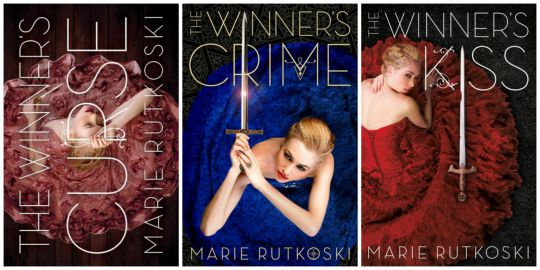
Book Review: The Winner's Trilogy

Safe to say that I don't often write reviews, mostly because not enough time.

BUT, the conclusion of a favorite series is a monumental thing.


THE WINNER'S TRILOGY
by Marie Rutkoski


Summary of Book I, Book II, Book III
Order Book I, Book II, Book III

Spoiler Free Review

This series just works on so many levels. Here I break down why:

The Characters

You won't find run of the mill characters in this trilogy. No tropes, no cliches. Instead you have characters who complement each other PERFECTLY. They were meant to be in these books, meant to be in their roles. Everything is so purposefully drawn. Specifically, our two leads weren't just chosen because they were intriguing on their own. So often this is the case, and yet it results in relationships lacking chemistry. Arin and Kestrel make so much sense as a pair. They are so similar, yet so different. What works so well is that they are equals in so many ways, and yet by the constructs of society, they are in very different places at the start of the series. The most beautiful journey is watching them slowly overcome their differences in initial positions and rediscovering the people they are innately, and reconciling how they have changed by the end of the journey. Secondary characters are also very nuanced and compelling.

The Writing

Second to plot (because I like to predict all the things), writing is probably what I'm most critical of, just because I admire good writing so much and am always striving to improve my own. The thing about good writing is that it's never too showy. It should never overtake the story. It serves. It's all too easy to forget this. Even now, when I read through my own drafts, I find lines that make me frown and think huh...I have a feeling that I just wrote that to be pretty.

Now, when you have the writing prowess of Marie, it's tempting to just fill a book of pretty writing that doesn't always serve the characters and the story. But these books don't fall into that trap. The writing and the story serve each other equally. Neither overpowers the other. You have scenes where the emotions and story need to take front and center. In those cases the writing does its job beautifully but knows not to overextend itself. Then you have quieter moments where the book gets more contemplative and emotional, and the writing knows that it's its time to shine. The balance of all things is handled so well.

Also, if you have trouble thinking of a mean metaphor, read this series. Oh my goodness, this series is loaded with the MOST BEAUTIFUL OF METAPHORS EVER.

The Plot

This is one of those rare times when for once I wasn't trying to out-think the author and predict all the twists. When there are twists, they are the sort that reside in the deepest part of your gut, the ones that you subconsciously aware of, as if you're watching this horror and with each second you KNOW something terrible is going to come, but the magic is you cannot look away. you absolutely cannot. You feel your helplessness - it's mirrored in the characters themselves - and Marie is a master at using that to drive the story forward.

Final Thoughts

Everything was handled so deftly, with so much care and honesty.

Something that my mom pointed out (because she's a fan of the books too) is that she could tell that the author had deep knowledge of the classics. I know what she means. The Winner's Trilogy is like a fine dark chocolate - it's not the initial burst of sweetness that knocks you off your feet, but rather slow unraveling of flavors and the series reveals its many layers. These books are the types that are worth reading and rereading over and over again, because there's always another shade of emotion to be discovered and another turn of phrase to be savored.

So there you have it. An extremely gushy/vague review (didn't want to spoil anything).

tldr; read The Winner's Trilogy. Do it, and then come back here to fangirl with me.

Monday, March 28, 2016

Self-Compassion Series: A Decompression Guide


The title says it all. For more context, I recently tweeted that I didn't get a chance to decompress over Spring Break, and so I'm trying to do that now. I'm a semi-workaholic ("semi" because I usually don't care at all about the things I'm not passionate about) and sometimes it's hard to remember to take some time to reengage with other passions.

Usual disclaimer: This is a list of things that work for me - yours will probably look different. I find the act of writing out the list helpful in reaffirming that I should do some of these things, so you might find it helpful to write out yours too.


THE GUIDE

1. Pleasure-read. This can be CPing, but often times for me, since I feel obligated to give any MS I'm CPing serious thought and digestion, I don't consider CPing pleasure reading. 
2. Go to a cozy cafe and eat + drink delicious things.
3. Combination of the above: read at your favorite cafe.
4. Catch up on sleep.
5. Exercise.
6. Take nice, long walks that don't really do anything significant for your cardiovascular health but are really good for you nonetheless.
7. Retail therapy.
8. Go out to dinner.
9. Watch a movie.
10. Engage in other forms of story-consumption - read fanfiction, read manga, watch anime, watch TV shows. 
11. If you have a pet, hug it.
12. If you're an extrovert - go be social.
13. If you're an introvert...try being social, unless it stresses you out, in which case hermit away.
14. Clean your living/working space.
15. Wash the pillowcases, sheets, and blankets.
16. Stay in your newly-cleaned bed all day.
17. Bake.
18. Cook.
19. Share your baking and cooking with someone special.
20. Be okay with doing "nothing". This is honestly the hardest one for me. It's okay to be unproductive. It's all about the balance. 


What are some things that you do to decompress? 

Sunday, March 13, 2016

Writing in College

Been meaning to write this post, and since it's the end of my spring break, I thought I'd get it up! From the title, you'll know that I'm going to get down to the truth of how I make time to write in college.

For a similar reads, here are some general tips I gave in a pervious post: 3 tips on juggling writing and school


A lot of writers are faced with the sentiment: "oh, I wish I had that much time to write!" And while the frustration writers feel in response is usually universal, everyone has a different way of making the time. Some carve out sacred hours. Some save the writing for weekends. For me, and for many others most likely, it's all about leading that double life.

STUDENT AND WRITER

I do decently in school, which fools people into thinking that I'm a massive try-hard (e.g. I was nominated for the "most likely to study for the SATs after the SATs" superlative senior year of high school, which was totally untrue--until I accepted the job to tutor SATs and then yes, I did have to study for the SATs three years after taking them -___-).

The truth is, I don't actually give school my all. I procrastinate. I cut corners by studying "just enough", whatever that means to whomever. I have a fantastic short-term memory which, to the dismay of my mom who would really like me to master Chinese, means that I excel at taking vocab quizzes by cramming the characters and forget them shortly afterwards.

But the aforementioned things alone do not "make" the time, especially since I am possibly one of the slowest writers I know. Instead, I've had to make decisions, most easy, but some harder.

I would be as busy as any other undergraduate if not for the following choices:

DISCLAIMER: I'm not saying that these are good or bad choices. These are simply choices that work for me.
  • I'm majoring in psychology, which isn't a walk in the park, but plays toward my strengths of being able to read and memorize, meaning that I can be more efficient in learning the material, meaning that I have more time to write. 
  • I'm not minoring, because I'd rather take a random assortment of classes for the pure sake of interest than fulfilling more required credits. This allows me to broaden my knowledge base and dabble in many things, which makes for inspiration, and also allows me more time. 
  • I take 4 classes each semester, which is 1 class fewer than the average load of 5. 
  • I participate in one club.
  • (and this one I hesitate to list because it's not an active choice...for the most part). I have no social life. A lot of people say this, but I say this and live this. I've never been to a single party even though I'm at a college with a "work hard, play hard" philosophy. I rarely hang out in person with friends. By nature, I am a super-introvert, and I like to hermit, so as I've said, it's mostly personal preference.
Am I sacrificing a bit of my college experience? Yes. Am I taking risks? Yes. Though I keep in contact with the the close ones, I might have fewer friends than the average fresh-out-of-college student at graduation. Minors might become all the rage, and I might not be able to find a job without one. Psychology isn't exactly the easiest field to find a career in, especially without a higher degree. 

But I take these risks. I've taken them before.

BEFORE

Before I lived the double life of student and writer, I lived the double life of student and artist. Looking back on the years (age 7-14), those "sacrifices" weren't as big as I made them out to be (Weekends spent in the studio. Weekdays spent in the studio. Competitions entered, competitions lost. Less time for playdates, more time spent staring at nude models, which is always a fun conversation topic now, but wasn't something I could casually bring up back in middle school). But they hurt as a kid. And I ultimately "quit" art (stepped off the professional track) because I was neither mature enough to understand why things had to be less than fun sometimes NOR (and this is key) passionate enough about art. 

NOW

I'm grateful that I experienced those previous years, because they've taught me that if you have a dream that you are passionate about, you have to give it your all, embracing both the bits that are fun and the bits that kind of suck, but are worth it in the long run.

If you're also leading the life of a writer and something else, I'd love to know what choices you've made in order to juggle both! 

Wednesday, January 6, 2016

Self-Compassion Series: Discipline vs Flexilibility


This past semester, I took a course in Positive Psychology. The lesson on self-compassion really struck home for me because I'm very self-critical and I realized just how little compassion I have for myself and my "failures". I know that I'm not alone, and that other writers also struggle to be more compassionate toward their short-comings. Through this series, I hope to share some tips and daily-reminders, and to document my own attempts at becoming more self-compassionate. 


DISCIPLINE vs FLEXIBILITY

I rolled out of bed at 7:15 AM today. That might be early for some and late for others. For me, it's quite early, considering that I'm on winter break and supposed to be catching up on sleep before the new semester starts. But this year, instead of lounging about, gaining weight, and watching random things, I set a goal to finish my chess WIP (read about here) before school starts up again on January 13th. Hence, the 7:15 alarms and subway rides, the trek to the Starbucks on campus in 30 degree weather (sometimes, I realize how sad my choice of writing nook is), and the trek back at 5PM.

It's good to be disciplined. Doing this every day for the last two weeks has only reminded me of why my dream job (someday!) is to be a full-time writer and author. And even though it can be hard at times, looking at the 3k I wrote (yes, I'm slow) is much more rewarding at the end of the day than checking to see how many episodes of anime I've binged on. Discipline has allowed me to get ever so close to the end of the WIP. It's in sight, and I'm so excited for the day I get to call this my 5th finished manuscript.

Today, however, I hit a wall. Not at first. When I rolled out of bed, I knew I was tired. But I figured I could just muscle through the sluggishness with a cup of coffee. I made the trek. I typed away at a new coffee shop (the Starbucks on campus is under renovations). It was cold. My eyes were dry. I felt hungry but also strangely not hungry. I continued to chug on in the name of discipline, and other things (I'd just bought a $2 black coffee in order to justify my hogging a seat for the next 6 or so hours; I'd only spent three hours here; if I moved now, I would ruin my writing mojo for the day).

I finished a chapter, and then my mind drew a blank.

At that point, I should have listened to what my body was trying to tell me--which was to go home, take a hot shower, eat something delicious, and spend some me-time. There was nothing unreasonable about doing any of those things. Instead, I plugged on. Or tried to.

It took thirty minutes of feeling miserable and not being productive at all for me listened to my body. I went home. I'm typing this now, from home, and after I post it, I'll be taking the hot shower I need. And despite feeling guilty at the coffee shop while I considered going home, I'm no longer guilty. I'm remembering the importance of tempering discipline with flexibility. Listen to your body. If you need a day off, take it. If you need a change of location, make the move. Many writers (and artists of all types) I know are so incredibly disciplined, which is good for finishing WIPs and sending books in by the deadlines, but if you remember to switch some things up, you'll avoid burning out in the long run. 

Thursday, December 24, 2015

The Procrastinator's Gift Guide: YA books edition

- All of the following recommendations will be YA books because that is mostly what I've read this year (when I had the time to do a bit of personal reading), and I wanted to make sure that I knew the books that I was recommending! That being said, people of any age can read and enjoy these books, as you shall see if you continue reading! Also, this list will be kind of short because I honestly haven't been very good about reading this year, but each and every book on this list is fantastic and deserves to be loved by someone this holiday season. 


Have a writer/book-lover friend you still need to buy a present for? There's still time to run to your local bookstore. For your convenience, I'll be listing books that have either been released this year (which increases the likelihood that it is in stock and on the shelves) or have had pretty good sales (which also means that the store still will stock).

So let's start with...

1. The person who likes to read everything but YA. This person might think YA is watered down, unsophisticated, etc. etc. (insert falsity of choice). This person would probably enjoy:

THE WINNER'S CURSE (series) by Marie Rutkoski

Gorgeously crafted writing? Check. A narrative and story structure with many layers, worthy of rereading once, twice, three+ times, with each reread revealing more nuggets of awesome? Check. Achingly real, flawed characters with relationships that will gouge out your heart because said relationships are just too perfect and imperfect? Check. If you're nice, you'll tell this friend of yours to hold off from reading book 2 until closer to the release date of book 3...

2. The person who wants to like reading, but is quite reluctant about it. This person might have a short attention span and finds it difficult to get into books. The only time they read is right before bed, when they need something to tire them out and put them to sleep. This person would probably enjoy:

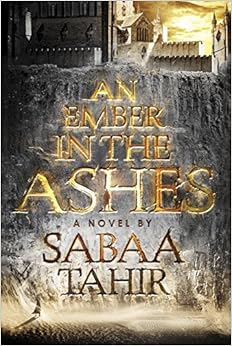
AN EMBER IN THE ASHES by Sabaa Tahir

Here's a true story: I gave this book to the high schoolers I was tutoring (for the SATs) this summer. For them, English is their second language. A lot of them expressed interest in reading, but found it tedious to get into books (I can imagine! I don't think I can even start to waddle my way through my Mandarin set of THE HUNGER GAMES). I tried to think of the most fast paced, gripping, action packed book I knew of to recommend to them, and lone and behold it was this one! I do believe I read this over studying for one of my finals last year ;)


3. The person who loves reading and loves writing and just wants to find a book with characters who also love reading and writing, who fangirl over awesome books and maybe even delve into fanfiction...? This one should be obvious:

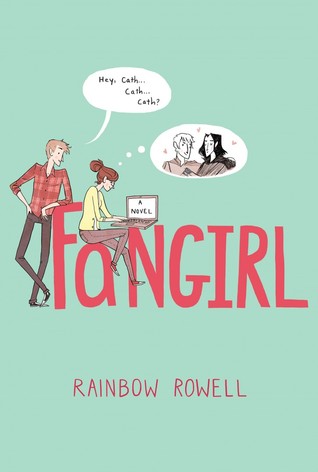
FANGIRL by Rainbow Rowell

This book was not released this year, but it's been so popular that I'm pretty sure you can find SPECIAL EDITION versions of them in your bookstore. It's a great winter read because it gives you all the warm and fuzzy feelings (that being said, it's not all rainbows and butterflies. It's just written in a wonderfully real style and narrated by a protagonist who is shy, awkward, and completely relatable). 

4. For the person who likes books, but likes movies more. Especially if this person's favorite movies are the high-stakes, intricately plotted types, you know they'll love a sweeping story with a movie-worthy cast to boot:

I mean, this was comped to Ocean's Eleven, and it's written by one of the queens of fantasy. The person you you give this to is a good hands. 

5. For the person who's witty and slightly cynical and a pain to buy for because they either tell you they don't want anything or you just a difficult time reading them. This person is probably an enigma, and you wonder what philosophical musings they're constantly entertaining in their heads:

WE ALL LOOKED UP by Tommy Wallach

This is a very honest and clever book. It takes many common tropes and stereotypes and subverts them (the genre itself--contemporary--is given a little twist from the dash of pre-apocalytptic). From characters to feels, it has a bit of everything. It's gripping yet savoring-worthy. It's maddening yet oddly zen. The feeling that you get after coming way from the last page is difficult to describe, just like the theme, but that's because everything is working together so organically. (Can you tell I'm having a hard time putting this book into words?)

6. And lastly, for the person who either 1. enjoys a good historical fiction with tea or 2. is very sentimental and doesn't mind a good cry. Because this book is sad. And this book came out ages (ok, not really, but comparatively) ago, but it's probably still stocked in bookstores. If it's not, I will be personally offended:

BETWEEN SHADES OF GRAY by Ruta Sepetys

And I have no words for this book.

Wednesday, December 23, 2015

The Procrastinator's Gift Guide (Writer's Edition)

Even though I've titled this "Writer's Edition", you can get these gifts for anyone, not just the person in your life who's probably ODing on coffee while querying. Just substitute "writer" with someone else whose gift-buying you've put off for far too long. 

If you have a CP or a writing friend, or just a friend, for whom you've been putting off buying a gift because they're a hermit you honestly don't know what to get them, I'm here to save you!

Sort of.

I'm going to list a few types of writers (and remember, you can substitute "writer" with "friend" or "coworker" or "mom", etc.) I've encountered over the years, and what types of last minute gifts they might appreciate. This is not an exhaustive list (and it definitely does not cover all types of writers, just broad categories), so feel free to use it only for inspiration.

THE GUIDE

  • For the one who is constantly stressed (on deadline? querying? on submission? desperately in need of sleep?):
    • A giftcard to a spa OR, if you really want to give them the most painful yet most rewarding gift, try to find a sports massage place. The people there will really attack those knots in their shoulders that they've developed from long hours hunching over their laptops.
    • A pamper kit. Throw together some lotions, scrubs, bath bombs (Bath & Body, Lush, even you local CVS can supply you) into a basket, wrap in cellophane, and it's going to look great.
    • Fuzzy socks/bathrobe/blanket. You can't go wrong with anything fuzzy. 
    • The comfiest set of pajamas you can find. You care for them, right? You want to drop subliminal hints that they should be getting more than three hours of a sleep a night, right?
    • THE SPLURGE ITEM: If this person is really special to you and/or you have a bit of money to splurge, consider getting them an essential oils diffuser. If you don't know what that is (I didn't before), google it--it's sort of like a humidifier that's primary purpose is to diffuse essential oils. This *might* seem like a superfluous or luxury item only found in yoga centers, but diffusing lavender essential oil in the bedroom can really help that stressed writer/friend unwind. 

  • For the one who is constantly working (and a BOSS at it, so they aren't necessarily that stressed at all, even though you think they should be):
    • A giftcard to their favorite writing nook - this can be a coffee shop that you know they like to frequent so that they can get an insane amount of writing/work done, or a bookstore. 
      • N.B. You should avoid encouraging the super stressed writer from adding additional caffeine to their diets because they are probably drinking more than their daily limit.
    • Notebooks. That might seem super ordinary, but you can up your notebook game by going for something with a nice tooth to it (makes the writing flow much better). Moleskins are a good option, and there are many others at your local bookstore. Remember, those writers who are pretty on top of things ALWAYS have a need for a notebook.
      •  You can also go for a planner.
    • A laptop case OR, if you're a more ambitious, a laptop messenger bag. Either will come in handy when they are trekking in the early hours of the morning to their writing nook. 
    • THE SPLURGE ITEM: You might want to consider bleeding a little on nice headphones. Not the earbuds that I'm currently wearing as I'm writing this post, but actual headphones that block out all other noise and allow these masters of work to sync to their best working tunes. These will be a very nice gift if you know this writer loves listening to a playlist while they write. Frends are a stylish option, but there are also others.
Hope this list gives you some ideas and prompts your gift brainstorming if you haven't started already! I didn't mention any books because tomorrow I'll be writing a post specifically about some books I think would make great gifts. Keep your eyes peeled for that :)

Tuesday, December 8, 2015

"new" WIP - THE FINAL BRILLIANCY

I was on my novels tab today and realized that I don't have a description of the current novel I'm working on up.

Whoops.

Basically, if you've been tagging along for the ride, or if I've had to read some earlier scenes, or if I've asked you for book recs, you might remember that my latest WIP was called AN ORDER OF CARDINALS. The short description is on my novel tab. It's thriller with some light scifi elements about computer hacking and people hacking (or, in much less nice terms, torture) and alternate universes (sort of). It's probably my most commercial idea ever. 

But I couldn't really figure out my characters, as one of my CP's so astutely noted, and after about 10k, I put it aside, wanting to understand the voice and motivations of my MC better before I proceeded. 

Well, during that time another idea struck me. I've always wanted to write about prodigiously smart characters who are a little weird and a lot of awkward, who aren't just the "nerd" sidekicks of a story but rather the main characters. And I wanted to try my hand at a story with a more central romance arc, because while I love reading achingly beautiful romances (like the one between Kestrel and Arin in THE WINNER'S CURSE), romance hasn't had a main role in any of my novels so far.

So cue in the star-crossed chess* prodigies. Here's the real title, and a quote, and the slimmest peek at part one (literally the slimmest):


And now I'm about 30something k in, so I thought I'd share it with you!


That's a super short twitter pitch (which doesn't mention that it's YA, but now you know). The story is set in an ante-apocalypse time period and is probably considered light scifi, but in the fashion of WE ALL LOOKED UP (completely different genre, I know), the focus is never really on the nitty gritty of the world ending but rather how situational and psychological forces catalyze change, discovery, propel people towards each other--and away. That's why it's only light scifi.

But that doesn't mean I'm skimping on the strategy games and the chess, because I think chess is such an intense game and it's sort of depressing when you realize it's so male dominated and not really featured in YA fiction. Seriously, scifi about chess should be no less valued that scifi about space or hacking etc.

*but chess is extremely hard to write about (while keeping it accurate AND exciting). Luckily, I've recruited the help of the bf, who is very skilled at the game and helps me think through some of the game scenes.

so tldr: My current WIP is about chess. And about people--who can play the pawn--being used as pawns themselves. And about brilliant characters who sometimes don't know what to say to each other (and who don't even talk to me sometimes since I'm way below them), but who speak so much through games and strategy. 

Here's to hoping that I survive finals and get to write during my winter break.

If you're currently brainstorming or writing a WIP, I'd love to hear about it!


Saturday, November 7, 2015

October: Pitch Wars and a month in review

Many a time during October, I imagined myself writing this post. How triumphant I would feel, knowing that I had survived.

And now I finally get to write it! Albeit sick. But I have my tumbler of warm liquids close by and fuzzy socks on, so it's not too bad. 

So if you've read this post, then you know that October was off the crazy charts. I was college counseling three students who are not native English speakers. I had to comprehensively + line-edit all their essays. It was fun but, as you can probably imagine, quite a bit of work. I also had college going on the in background, and the usual onslaught of readings and exams.

And then I had Pitch Wars.

I've heard about various revision experiences, from getting a few line edits to changing the POV entirely to tearing out sections and rewriting. I'll be upfront and say that I did not have to rewrite my book, and so I guess I could have had it worse in terms of work-load. My biggest/hardest edit was increasing the tension and pacing in the beginning.  

At the same time, I am a notoriously slow reviser. First, I take a lot of time to mull over solutions. Then I take a lot of time to implement them because I mull over word choice and other nit-gritty things like that. I am also a slower drafter. Basically, I am slow at everything.

So despite the comparatively "smaller" revision, I ended up slaving over it. 

Going into October, I realized that I had all of this on my plate. And since I like placing a lot of stress on myself, I resolved that I would not let anything slide. I would give my kids all the counseling that they needed. I would get the grades I wanted. I would complete PW to my satisfaction.

And now I'm glad to say that I kept my promise to myself!

(With the exception of one exam that I'm pretty sure I did not do so hot on, but that was an early November exam, so not officially part of the October crazies).

I think the key to staying somewhat sane (the bf would argue otherwise and say that I was not sane at all) is to remember to do the little things. For example, I rarely paint my nails during the summer, but come fall and winter, there's just something satisfying about having nice nails to go with my sweaters. So despite not having that much time, I tried to take a little time for myself every other week to paint my nails. I even got some new Essie colors to inspire me!

That might sound like something really small, and I agree it was. I had to give up some bigger things. My fall break is one example. While my roommates from Texas and New Jersey all left to go home for their fall break, I stayed at my dorm for the majority of it even though I live twenty minutes away. I decided to use that quiet time to work on revisions, and I'm glad to say that I got a lot done during those days! When everyone returned, refreshed, I was anything but refreshed, but sometimes you can't have everything (even I recognize that). 


But the thing about giving things up to accomplish something is to make sure that you then celebrate your accomplishment. I fall victim to getting swept into the frenzy of everything and not truly savoring my accomplishments. This time I was determined so carve out some time and not fall into that habit. 


So three of my good friends and I went to Linvilla Orchards for apple picking. This is the place that I used to go to for my birthday as a kid. It's been years since I last went. 


I actually didn't end up picking/buying any apples, but it was still incredibly fun. We all went out to dinner afterwards, and then I splurged on some fancy tea. 

In the end, was it a rough month? Yes, it was. Probably the roughest month of all time. But was it worth it? Yes, a thousand times.

And I couldn't have done it without the support of all the various people in my life. Thank you to:

- My parents, who realized that I wasn't eating as well as I should have. My mom, who works close to my college campus, took me out to lunch many a time during the month. She also read through the first 50 of HESPERIA again when I asked her to evaluate the changes. 

- My CP's Molly, Laura, Anne, and Deb. Some of you have read HESPERIA as I was writing it, some have read later drafts, but no matter what time of the MS I found you at, you have all helped it grow so much. 

- My fellow writer friends who have been so supportive on fb and twitter.

- My biffles Sean and Cindy, who remind me to have fun even when I'm all grumpy and convinced that there is no time for fun. 

- The Pitch Wars mentee community. You guys are the bomb. I'm neither the most social person ever nor the person who posts the wittiest and funniest posts, and so sometimes I find fb groups intimidating, but I'm so, so glad that this community is one that I feel like I'll turn to for a longgggg time. Thanks for all the hugfests, guys :)

- My mentor Mara, who literally opened this golden door of opportunity for me. Her fierce championing of the manuscript still blows me away sometimes, and I still have to pinch myself to believe it's real. Without her, this post wouldn't exist. Without her, I wouldn't have had the chance to go on this journey of my life. So thank you. Thank you.

- And lastly, the bf I've mentioned before. He's worn many hats for me--beta reader, idea brainstormer, restaurant exploring partner, cheerleader, and best hug-giver. We just celebrated 1.5 years together today, so he's really had a chance to see all the scary that is involved in the journey of a writer seeking publication.

Luckily, I haven't scared him away yet :D


How was your October?

Friday, October 30, 2015

2015 PitchWars Mentee Blog Hop: The Inspiration Behind HESPERIA

If you'd like to learn more about HESPERIA, here are some older posts on the MS:

-Nanowrimo Check-in #1 (where I talk about the conception of HESPERIA)

-Nanowrimo Check-in #2 (where you get to read an excerpt from draft #1)

-Post-Manuscript Completion Thoughts (where I get quite emotional over the roller-coaster that was the drafting process of HESPERIA)

-On Contests (where I talk about how HESPERIA fared in PitchSlam)

-Diversity in YA and my reservations (where I talk about the way I feature diversity in HESPERIA and how it doesn't really fit the conventional mold of "Asian characters")

This amazing art is by SansaXIX. Check out her profile for more.
As you can tell, this isn't the first time I'm talking about this MS on the blog, so I'll try to keep this post from becoming long-winded like all my other posts (and of course, I've probably jinxed myself by saying that). 

But yes, feel free to check out my other posts on the journey that this MS has been through.

Now to the point of this blog hop. HESPERIA, unlike some of my other MS's, didn't arise from a particular scene that I dreamed of or envisioned. Instead, I was very stuck in my other MS, THE SERENDIPITY LABS (description in my Novels tab). I took a break, during which I did a lot of knitting--finished my first scarf, in fact!--and Asian drama watching.

My favorite genre of Asian drama is wuxia, which basically translates into swords/historical/fantasy. And I especially love the dramas that have a bit of action but are grounded in political intrigue. Which means I loveeeee dramas set in the imperial palace, or during a particular dynasty. 

So I finished my 59 episode binge of Legend of Lu Zhen. It wasn't the greatest--there was a lot of petty drama between the different consorts and maids, which is meh--but I still enjoyed it. It got me thinking that I wished that there could be an China-inspired fantasy with the production values of, say, Game of Thrones. Because that would totally rock. There are so many inspiration-serving Chinese legends and classics and epics as a result of its enormous history. So many of those legends and classics (such as Water Margin, Dream of the Red Chamber, Journey to the West) are unaccessible to Western audiences, however, not because they haven't been translated, but I suspect because of cultural barriers. Plus, being classics, they aren't really...as palatable or easy to get into as YA fiction. I certainly haven't read those monsters--I've watched drama adaptations of them.

With the thought of something Asian inspired and something classical in my mind, an idea suddenly hit me. Why not take a really popular and pretty accessible Western novel in the classical canon, fantasify it, and give it an Asian twist? By the way, I thought I was sooo clever when I thought of doing a "retelling" of a classic, since there were so many fairytale retellings out there but not as many classic retellings (other than Shakespeare ones and Jane Austen ones). Well turns out I'm not so clever because as HuffPost shows, classic retellings are going to be a big thing in 2016. 

*weeps*

(I see now how my posts grow so long-winded)

Anyway, I settled on To Kill a Mockingbird because I really enjoyed the themes of the book and how they were delivered so innocently and simply. The court scene chapters were also some of my favorites to ever read in any classic, and I thought it'd be really cool to incorporate them in a fantasy setting and infuse them with political intrigue.

And the rest is history.

I'd say that the themes in HESPERIA are pretty clear, and you can probably tell the TKAM influence if you read it. For example, Hesperia's prejudice and discrimination toward her half-brother Roon serve to represent a microcosm of the prejudice and discrimination rampant in the book against the seers and magicians. It's only when she starts realizing that people only discriminate because of their own insecurities (in the case of Hesperia, the friction between her blood-brother and not being loved by her own mother. For the people of the kingdom, it's insecurity about their safety and peace) that she is able start to overcome her prejudice toward the seers and magicians.

There are some pretty crucial parts of the trials that mirror the trials in TKAM.

And if you pay attention to some of the characters, you'll see that some have been inspired by characters in TKAM (namely Roon and the Damalee = Boo Radley, Warnick = Tom Robinson).

Okay, I'm done! Didn't mean for that to turn into an analysis of literature. Many of my blog readers are people who've stuck with me through thick and thin, and so hopefully this is sort of interesting to you, especially if you've read the MS :)

Check out the rest of the Mentees' posts here. 

Sunday, October 11, 2015

An Update of Sorts

As I've mentioned before, I'm PACKED* this month. I haven't ever had to juggle so much. But while reflecting on the busyness, I actually find some things hilarious. So this is a quick snapshot of what's going on in my life.

*college counseling three kids who are applying to a bunch of 11/1 deadlines, participating in Pitchwars, the launch of Penn's peer counseling group (and of course, college, which almost feels deceptively insignificant at this point but really isn't...so much work)

On the food scene:

-I've consumed a lot of peanut butter sandwiches:


-And a lot of almonds:


-And a lot of coffee (by a lot I really mean my cup-a-day, but I was actually off coffee for a while before this month. Now I'm back to getting headaches when I don't drink it in the mornings!)

On the school scene:

-I'm done midterms! For like, a week and a half! And then I have round two of exams! Weee!!!

On the reading scene:

-*cue cricket chirps* I really need to read the MS for a CP before the month of October ends. So once I have reading time in my life again, that's the first thing I'm doing. 

-Does college-required reading count? Not really in my mind...

On the clothing scene:

-Comfy and easy to wash clothes all day, all night. Pajamas are my friend.

On the social scene:

- Me to the BF: Hey, read this. *shoves MS into his face*
BF: *reluctantly stops spectating a video game tournament* *reads* It's good.
Me: Pinpoint exactly what it is that is good. And tell me if its better than the original. It needs to be better than the original. I'm just not really sure if it is.
BF: Well...you know I like the original. Basically, I like everything you write. Everything is unicorns and rainbows. *eyes drift back to video game*
Me: *uses amazing detective skills and reads into that as a bad sign* Welp. Everything I write sucks. I hate revising. You're unhelpful. Goodbye.

-And literally, that's all I have going on socially. I have been interacting with a minimal number of human beings. 

How's October going for you?