Tuesday, April 19, 2016
Diversity in YA: Culture is More Than Character
This has been a post I've been wanting to write for a while now but have refrained from doing so because I'm not always the best at articulating my thoughts, and I have a lot of thoughts on this.
But with #DVpit and the push for diverse voices in YA literature (and all kinds of literature, though I can only really speak for YA because that's what I write and read), I realized I should attempt this post.
So bear with me here. I'll try not to ramble.
Culture is more than character. By this I mean that in order to write a culture effectively, it's not only necessary to make sure you get the character right (character = looks, values, mannerisms, etc., basically anything embodied in the individual) but that you also consider the way you are telling the story.
Because culture manifests on a far bigger scale than the individual.
Each culture has its unique forms of story-telling. Look at all the various types of story-telling that exist in some of the East Asian countries alone. Light novels, anime, and manga make up huge sectors of the entertainment market in Japan. The popularity of Korean dramas crosses continental divides. Web-novels have become increasingly prominent in China--some, such as the acclaimed Lang Ya Bang, have been adapted into big-budget dramas (and viewership of this drama is equal to that of Game of Thrones.)
Here's the thing: I can't just pick up any YA novel, animate it/turn it into a graphic novel, and call it an anime/a manga. Simple elements that we often know to be universal to storytelling--inciting incident, turning-points, plot arcs--are not actually as universal as they seem. Yes, almost every story has these elements. But how they are handled and presented, how they are written, are often times dependent on culture. Smaller things such as tropes and cliches are not universal, either. What is cliche in one culture's story-telling medium is not necessarily cliche in another's. Tropes (and subversions of tropes) are tied to culture. You cannot separate the manner in which a story is presented from the culture.
I write this because when I write my culture, I don't stop at the character level. The way I plot and the way I construct elements of a culturally influenced story is, well, culturally influenced. And sometimes, this means that the resulting story breaks some conventions of the YA market. But I write this way because it's the only way I can convey my culture on all the levels it deserves.
I admire all different kinds of YA novels. But I also admire other kinds of story-telling. Now, maybe you believe that books should only be comped to books. But people in the book world and industry understand movie comps. (e.g. Six of Crows being comped to Ocean's Eleven). I really hope one day, as this world becomes more an more multicultural and accepting of all different kinds of voices, that people will also come to understand comps of different story-telling mediums and of different cultures.
And mostly, I hope that as the need for culturally diverse works spreads, I'll read not just about culturally influenced characters who live in the culture of YA storytelling, but culturally influenced characters who live in culturally influenced worlds and plots.
I'd love to hear from you guys. Let me know if you have any thoughts on this, or share your experience writing something culturally influenced!

Thursday, March 31, 2016
Book Review: The Winner's Trilogy
Safe to say that I don't often write reviews, mostly because not enough time.
BUT, the conclusion of a favorite series is a monumental thing.
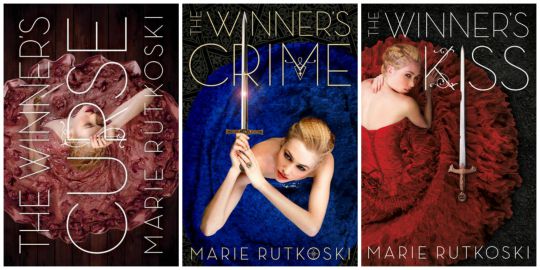
Summary of Book I, Book II, Book III
Order Book I, Book II, Book III
This series just works on so many levels. Here I break down why:
You won't find run of the mill characters in this trilogy. No tropes, no cliches. Instead you have characters who complement each other PERFECTLY. They were meant to be in these books, meant to be in their roles. Everything is so purposefully drawn. Specifically, our two leads weren't just chosen because they were intriguing on their own. So often this is the case, and yet it results in relationships lacking chemistry. Arin and Kestrel make so much sense as a pair. They are so similar, yet so different. What works so well is that they are equals in so many ways, and yet by the constructs of society, they are in very different places at the start of the series. The most beautiful journey is watching them slowly overcome their differences in initial positions and rediscovering the people they are innately, and reconciling how they have changed by the end of the journey. Secondary characters are also very nuanced and compelling.
Second to plot (because I like to predict all the things), writing is probably what I'm most critical of, just because I admire good writing so much and am always striving to improve my own. The thing about good writing is that it's never too showy. It should never overtake the story. It serves. It's all too easy to forget this. Even now, when I read through my own drafts, I find lines that make me frown and think huh...I have a feeling that I just wrote that to be pretty.
Now, when you have the writing prowess of Marie, it's tempting to just fill a book of pretty writing that doesn't always serve the characters and the story. But these books don't fall into that trap. The writing and the story serve each other equally. Neither overpowers the other. You have scenes where the emotions and story need to take front and center. In those cases the writing does its job beautifully but knows not to overextend itself. Then you have quieter moments where the book gets more contemplative and emotional, and the writing knows that it's its time to shine. The balance of all things is handled so well.
Also, if you have trouble thinking of a mean metaphor, read this series. Oh my goodness, this series is loaded with the MOST BEAUTIFUL OF METAPHORS EVER.
This is one of those rare times when for once I wasn't trying to out-think the author and predict all the twists. When there are twists, they are the sort that reside in the deepest part of your gut, the ones that you subconsciously aware of, as if you're watching this horror and with each second you KNOW something terrible is going to come, but the magic is you cannot look away. you absolutely cannot. You feel your helplessness - it's mirrored in the characters themselves - and Marie is a master at using that to drive the story forward.
Everything was handled so deftly, with so much care and honesty.
Something that my mom pointed out (because she's a fan of the books too) is that she could tell that the author had deep knowledge of the classics. I know what she means. The Winner's Trilogy is like a fine dark chocolate - it's not the initial burst of sweetness that knocks you off your feet, but rather slow unraveling of flavors and the series reveals its many layers. These books are the types that are worth reading and rereading over and over again, because there's always another shade of emotion to be discovered and another turn of phrase to be savored.
So there you have it. An extremely gushy/vague review (didn't want to spoil anything).
tldr; read The Winner's Trilogy. Do it, and then come back here to fangirl with me.
BUT, the conclusion of a favorite series is a monumental thing.
THE WINNER'S TRILOGY
by Marie Rutkoski
Summary of Book I, Book II, Book III
Order Book I, Book II, Book III
Spoiler Free Review
The Characters
The Writing
Now, when you have the writing prowess of Marie, it's tempting to just fill a book of pretty writing that doesn't always serve the characters and the story. But these books don't fall into that trap. The writing and the story serve each other equally. Neither overpowers the other. You have scenes where the emotions and story need to take front and center. In those cases the writing does its job beautifully but knows not to overextend itself. Then you have quieter moments where the book gets more contemplative and emotional, and the writing knows that it's its time to shine. The balance of all things is handled so well.
Also, if you have trouble thinking of a mean metaphor, read this series. Oh my goodness, this series is loaded with the MOST BEAUTIFUL OF METAPHORS EVER.
The Plot
This is one of those rare times when for once I wasn't trying to out-think the author and predict all the twists. When there are twists, they are the sort that reside in the deepest part of your gut, the ones that you subconsciously aware of, as if you're watching this horror and with each second you KNOW something terrible is going to come, but the magic is you cannot look away. you absolutely cannot. You feel your helplessness - it's mirrored in the characters themselves - and Marie is a master at using that to drive the story forward.
Final Thoughts
Everything was handled so deftly, with so much care and honesty.
Something that my mom pointed out (because she's a fan of the books too) is that she could tell that the author had deep knowledge of the classics. I know what she means. The Winner's Trilogy is like a fine dark chocolate - it's not the initial burst of sweetness that knocks you off your feet, but rather slow unraveling of flavors and the series reveals its many layers. These books are the types that are worth reading and rereading over and over again, because there's always another shade of emotion to be discovered and another turn of phrase to be savored.
So there you have it. An extremely gushy/vague review (didn't want to spoil anything).
tldr; read The Winner's Trilogy. Do it, and then come back here to fangirl with me.
Monday, March 28, 2016
Self-Compassion Series: A Decompression Guide

The title says it all. For more context, I recently tweeted that I didn't get a chance to decompress over Spring Break, and so I'm trying to do that now. I'm a semi-workaholic ("semi" because I usually don't care at all about the things I'm not passionate about) and sometimes it's hard to remember to take some time to reengage with other passions.
Usual disclaimer: This is a list of things that work for me - yours will probably look different. I find the act of writing out the list helpful in reaffirming that I should do some of these things, so you might find it helpful to write out yours too.
THE GUIDE
1. Pleasure-read. This can be CPing, but often times for me, since I feel obligated to give any MS I'm CPing serious thought and digestion, I don't consider CPing pleasure reading.
2. Go to a cozy cafe and eat + drink delicious things.
3. Combination of the above: read at your favorite cafe.
4. Catch up on sleep.
5. Exercise.
6. Take nice, long walks that don't really do anything significant for your cardiovascular health but are really good for you nonetheless.
7. Retail therapy.
8. Go out to dinner.
9. Watch a movie.
10. Engage in other forms of story-consumption - read fanfiction, read manga, watch anime, watch TV shows.
11. If you have a pet, hug it.
12. If you're an extrovert - go be social.
13. If you're an introvert...try being social, unless it stresses you out, in which case hermit away.
14. Clean your living/working space.
15. Wash the pillowcases, sheets, and blankets.
16. Stay in your newly-cleaned bed all day.
17. Bake.
18. Cook.
19. Share your baking and cooking with someone special.
20. Be okay with doing "nothing". This is honestly the hardest one for me. It's okay to be unproductive. It's all about the balance.
What are some things that you do to decompress?
Sunday, March 13, 2016
Writing in College
Been meaning to write this post, and since it's the end of my spring break, I thought I'd get it up! From the title, you'll know that I'm going to get down to the truth of how I make time to write in college.
For a similar reads, here are some general tips I gave in a pervious post: 3 tips on juggling writing and school
STUDENT AND WRITER
I do decently in school, which fools people into thinking that I'm a massive try-hard (e.g. I was nominated for the "most likely to study for the SATs after the SATs" superlative senior year of high school, which was totally untrue--until I accepted the job to tutor SATs and then yes, I did have to study for the SATs three years after taking them -___-).
The truth is, I don't actually give school my all. I procrastinate. I cut corners by studying "just enough", whatever that means to whomever. I have a fantastic short-term memory which, to the dismay of my mom who would really like me to master Chinese, means that I excel at taking vocab quizzes by cramming the characters and forget them shortly afterwards.
But the aforementioned things alone do not "make" the time, especially since I am possibly one of the slowest writers I know. Instead, I've had to make decisions, most easy, but some harder.
I would be as busy as any other undergraduate if not for the following choices:
DISCLAIMER: I'm not saying that these are good or bad choices. These are simply choices that work for me.
- I'm majoring in psychology, which isn't a walk in the park, but plays toward my strengths of being able to read and memorize, meaning that I can be more efficient in learning the material, meaning that I have more time to write.
- I'm not minoring, because I'd rather take a random assortment of classes for the pure sake of interest than fulfilling more required credits. This allows me to broaden my knowledge base and dabble in many things, which makes for inspiration, and also allows me more time.
- I take 4 classes each semester, which is 1 class fewer than the average load of 5.
- I participate in one club.
- (and this one I hesitate to list because it's not an active choice...for the most part). I have no social life. A lot of people say this, but I say this and live this. I've never been to a single party even though I'm at a college with a "work hard, play hard" philosophy. I rarely hang out in person with friends. By nature, I am a super-introvert, and I like to hermit, so as I've said, it's mostly personal preference.
Am I sacrificing a bit of my college experience? Yes. Am I taking risks? Yes. Though I keep in contact with the the close ones, I might have fewer friends than the average fresh-out-of-college student at graduation. Minors might become all the rage, and I might not be able to find a job without one. Psychology isn't exactly the easiest field to find a career in, especially without a higher degree.
But I take these risks. I've taken them before.
BEFORE
Before I lived the double life of student and writer, I lived the double life of student and artist. Looking back on the years (age 7-14), those "sacrifices" weren't as big as I made them out to be (Weekends spent in the studio. Weekdays spent in the studio. Competitions entered, competitions lost. Less time for playdates, more time spent staring at nude models, which is always a fun conversation topic now, but wasn't something I could casually bring up back in middle school). But they hurt as a kid. And I ultimately "quit" art (stepped off the professional track) because I was neither mature enough to understand why things had to be less than fun sometimes NOR (and this is key) passionate enough about art.
NOW
I'm grateful that I experienced those previous years, because they've taught me that if you have a dream that you are passionate about, you have to give it your all, embracing both the bits that are fun and the bits that kind of suck, but are worth it in the long run.
If you're also leading the life of a writer and something else, I'd love to know what choices you've made in order to juggle both!
Wednesday, January 6, 2016
Self-Compassion Series: Discipline vs Flexilibility
This past semester, I took a course in Positive Psychology. The lesson on self-compassion really struck home for me because I'm very self-critical and I realized just how little compassion I have for myself and my "failures". I know that I'm not alone, and that other writers also struggle to be more compassionate toward their short-comings. Through this series, I hope to share some tips and daily-reminders, and to document my own attempts at becoming more self-compassionate.
DISCIPLINE vs FLEXIBILITY
It's good to be disciplined. Doing this every day for the last two weeks has only reminded me of why my dream job (someday!) is to be a full-time writer and author. And even though it can be hard at times, looking at the 3k I wrote (yes, I'm slow) is much more rewarding at the end of the day than checking to see how many episodes of anime I've binged on. Discipline has allowed me to get ever so close to the end of the WIP. It's in sight, and I'm so excited for the day I get to call this my 5th finished manuscript.
Today, however, I hit a wall. Not at first. When I rolled out of bed, I knew I was tired. But I figured I could just muscle through the sluggishness with a cup of coffee. I made the trek. I typed away at a new coffee shop (the Starbucks on campus is under renovations). It was cold. My eyes were dry. I felt hungry but also strangely not hungry. I continued to chug on in the name of discipline, and other things (I'd just bought a $2 black coffee in order to justify my hogging a seat for the next 6 or so hours; I'd only spent three hours here; if I moved now, I would ruin my writing mojo for the day).
I finished a chapter, and then my mind drew a blank.
At that point, I should have listened to what my body was trying to tell me--which was to go home, take a hot shower, eat something delicious, and spend some me-time. There was nothing unreasonable about doing any of those things. Instead, I plugged on. Or tried to.
It took thirty minutes of feeling miserable and not being productive at all for me listened to my body. I went home. I'm typing this now, from home, and after I post it, I'll be taking the hot shower I need. And despite feeling guilty at the coffee shop while I considered going home, I'm no longer guilty. I'm remembering the importance of tempering discipline with flexibility. Listen to your body. If you need a day off, take it. If you need a change of location, make the move. Many writers (and artists of all types) I know are so incredibly disciplined, which is good for finishing WIPs and sending books in by the deadlines, but if you remember to switch some things up, you'll avoid burning out in the long run.
Subscribe to:
Posts (Atom)